
By Screen Media Works Editorial TeamUpdated
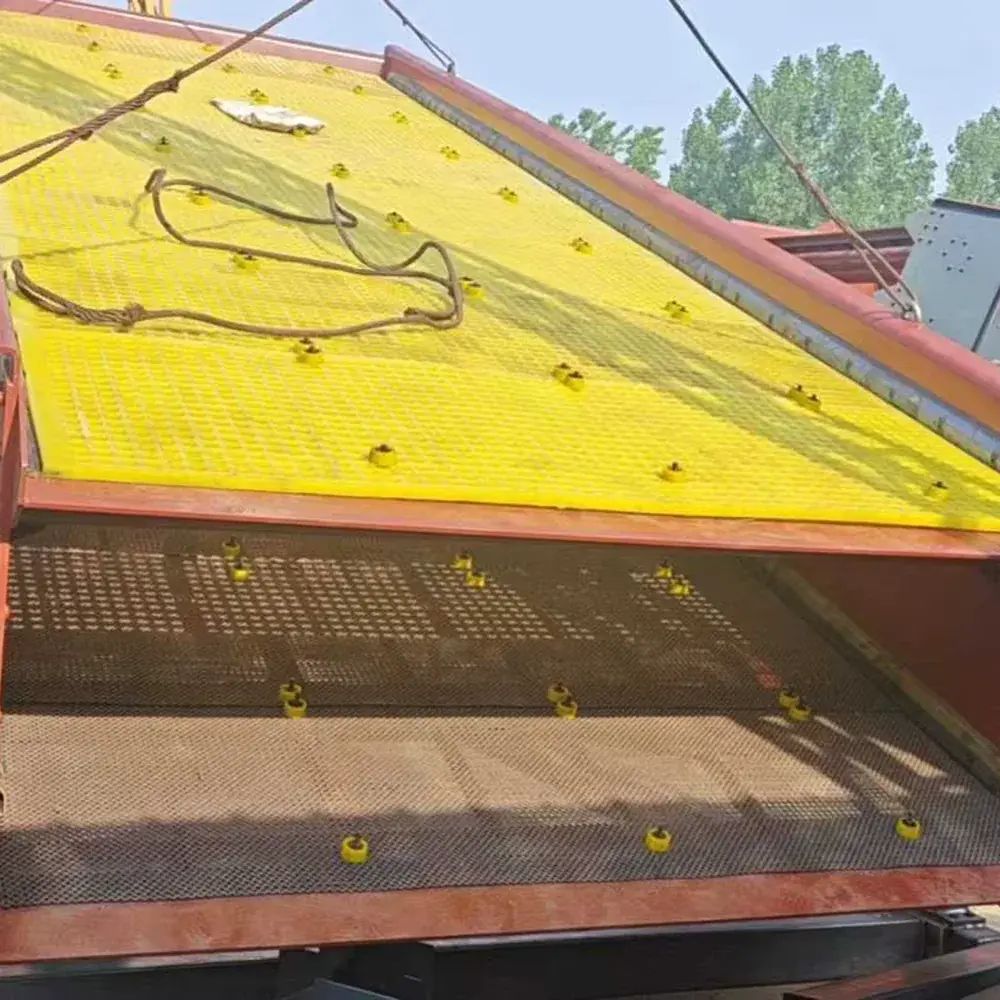
Vibrating screen blinding vs pegging: identify the obstruction
Diagnosing vibrating screen blinding vs pegging begins with what occupies the opening. Is a particle wedged into it, or is a coating spreading over the surface? Metso distinguishes trapped rocks from adhering moist fines. Both can occur on the same deck, so record the evidence before assuming that one replacement material will resolve the problem.
Use the following checks to prepare a useful maintenance and purchasing discussion. They are not instructions to alter machine settings or clear a running screen. Follow the site's isolation procedure and equipment manual for inspection, sampling and cleaning. Keep observed facts separate from proposed causes, and define the required separation before considering changes to aperture or media construction.
1. Photograph the pattern before cleaning
During an authorized inspection, take an overall deck photograph and closer views of representative blocked and clear areas. Mark the feed end, discharge end and material-flow direction. Connect each detail to a deck position rather than sending an isolated photograph with no location. Record whether the condition develops gradually, appears after a feed change or returns soon after cleaning.
Describe the obstruction plainly: individual stones held in apertures, a continuous film, compacted deposits, or a mixture. Include the underside where safely accessible, because a top view can conceal an obstruction below the opening. Keep the previous cleaning method and time in the maintenance record. Do not infer the material formulation or a guaranteed remedy from a photograph; the aim is to establish a repeatable description of the symptom.
2. Check near-size particles and particle shape
For suspected pegging, ask for representative feed gradation and examples of the particles actually retained in the openings. Sandvik identifies near-size and elongated particles as relevant causes. Distinguish the measured aperture from the nominal product cut: they describe different things. Note whether one opening orientation or one deck zone is affected more heavily than the others.
Have the process team review the sampling method and any upstream change, including crusher setting changes already recorded by the plant. A few selected stones do not describe the entire feed. Ask whether the proposed aperture geometry would still meet the product requirement before requesting an alternative. Changing a hole shape or making it larger solely to release particles can change the separation; obtain an application review rather than treating the change as a like-for-like purchase.
3. Record moisture, fines and changing feed conditions
For suspected blinding, document the fines and moisture information available for the affected period. Keep laboratory results, operator observations and estimates separately identified. Note clay-bearing feed, blended sources, weather-related changes or process-water changes where these are known. Avoid declaring a universal moisture limit: the relevant behaviour depends on the material and the operating duty.
Collect comparable records from an acceptable operating period if they exist. A shift log showing when deposits begin can be more useful than a generic description such as wet material. For a washing or dewatering duty, explain whether the concern is blocked openings, retained water or both. These symptoms require different evidence. A dewatering-panel enquiry should describe drainage conditions as well as the screening surface, without assuming that replacement media alone determines final moisture.
4. Locate feed concentration and support obstructions
Map the blockage against feed distribution, panel borders and the supporting structure. Sandvik's troubleshooting guidance connects uneven loading with screening problems. Ask the plant team whether one lane receives most of the feed and whether the pattern changed after chute work. Record observations without reaching into the machine or changing operating settings for this inspection.
Check drawings and safe underside photographs for supports beneath affected openings. Metso notes that blank zones can protect the structure where apertures would otherwise interfere with it. A blank border is therefore not automatically wasted space. Ask the supplier to show the intended support and open-area arrangement on the proposed drawing. Do not remove a support, drill a panel or eliminate a protective blank zone to chase a larger advertised open-area percentage.
5. Compare polyurethane options against the installed system
Polyurethane media can be considered for a defined duty, but flexibility must be evaluated together with loading and support. McLanahan discusses media selection as a balance of open area and wear considerations. Do not convert that general guidance into a promise of higher throughput, a fixed service life or freedom from blockage on your machine.
Identify whether the current deck uses modular panels, tensioned media, dewatering panels or a true flip-flow arrangement. These are not interchangeable merely because the surfaces are polyurethane. A flip-flow proposal needs confirmation of the machine's flexing mechanism and perimeter retention. A modular or tensioned replacement needs its actual fixing or hook geometry. Ask for the construction and interface being quoted, including any machine-level work required for a proposed conversion.
6. Define a controlled review instead of a guaranteed fix
Write down the outcome to assess before selecting a replacement: fewer blocked openings, an acceptable product split, manageable cleaning work, or another documented requirement. Agree how the plant will observe that outcome under comparable feed conditions. Separate a media replacement from an operating adjustment so that the resulting evidence remains interpretable.
Keep the current drawing, proposed drawing and observations together. Ask the responsible equipment specialist to approve any changes to motion, loading or deck arrangement. Where operating data are missing, request them rather than filling the gap with an optimistic prediction. Stop the selection review if the retaining interface or permitted duty cannot be established. An unresolved machine or feed problem should remain an explicit open item in the quotation discussion.
Diagnostic comparison: vibrating screen blinding vs pegging
Use this table to organize observations. It is not a diagnosis from appearance alone; mixed symptoms require both checks.
| Check | Blinding enquiry | Pegging enquiry |
|---|---|---|
| Visible obstruction | Describe adhering fines or surface deposits. | Describe particles wedged in individual openings. |
| Feed evidence | Record fines, moisture and known source changes. | Record near-size content and particle shape. |
| Location | Map deposits against loading and deck zones. | Map trapped particles against openings and supports. |
| Aperture review | Confirm the required separation before changes. | Compare actual openings with retained particles. |
| Media review | Assess flexibility with support and loading. | Assess geometry and flexibility within the installed system. |
| Acceptance evidence | Compare deposit and cleaning observations. | Compare blockage observations and product separation. |
Send a problem description with the replacement enquiry
Use the relevant product links below to identify the installed family, and the Replacement Guide to prepare same-reference photographs and measurements. Start the RFQ with the evidence already available; label any missing underside, feed or drawing information for follow-up.
Standard panels are in stock (3–7 day lead time); custom panels are made to drawing or sample (lead time confirmed per drawing or tooling), with no MOQ and worldwide shipping. Confirm the selected configuration and availability; these terms do not guarantee a particular anti-blinding result or stock of every interface.
- Machine, deck position, media reference, drawing revision and required quantity.
- Blocked and clear areas, top and underside details, with material-flow direction.
- Measured aperture and panel details, feed information and the required product separation.
- Observed onset, cleaning history, recent changes and the outcome to evaluate.
Related resources
- Polyurethane Dewatering Screen Panels
Identify the installed drainage-media construction and slot arrangement.
- Flip-Flow Polyurethane Screen Panels
Check whether the machine uses the required flexing and perimeter system.
- Modular Polyurethane Screen Panels
Review module, underside and fixing identification before proposing a replacement.
- Tensioned Polyurethane Screen Panels
Identify hook edges, tensioning direction and support arrangement.
- Screen Panel Replacement Guide
Prepare measured and photographed evidence for the current installation.
- Request a Quote
Send the observed problem, installed reference and known operating conditions.
- Flip-Flow Polyurethane Screen Panels: 6 Essential Checks
Check the installed flexing system before considering a flip-flow media replacement.
- Polyurethane Dewatering Screen Panels: 7 Critical Factors
Review drainage and fines-retention evidence when blockage occurs in a wet duty.
Technical references
- Metso — How to reduce pegging and blinding
Definitions of trapped particles and adhering fines, plus support and flexibility considerations. OEM examples are not SMW performance guarantees.
- Sandvik — Trouble shooting examples
Feed distribution, near-size particles and blockage mechanisms. Machine settings require equipment-specific approval.
- McLanahan — How to Choose the Right Type of Screen Media for Your Aggregate Plant
Media-selection trade-offs and loading considerations, not a universal guarantee for polyurethane.
- Metso — Screening Media Handbook, Version 2.1
Installed-media and open-area context. Confirm drawings and supports rather than transferring catalog dimensions or performance claims.