
By Screen Media Works Editorial TeamUpdated
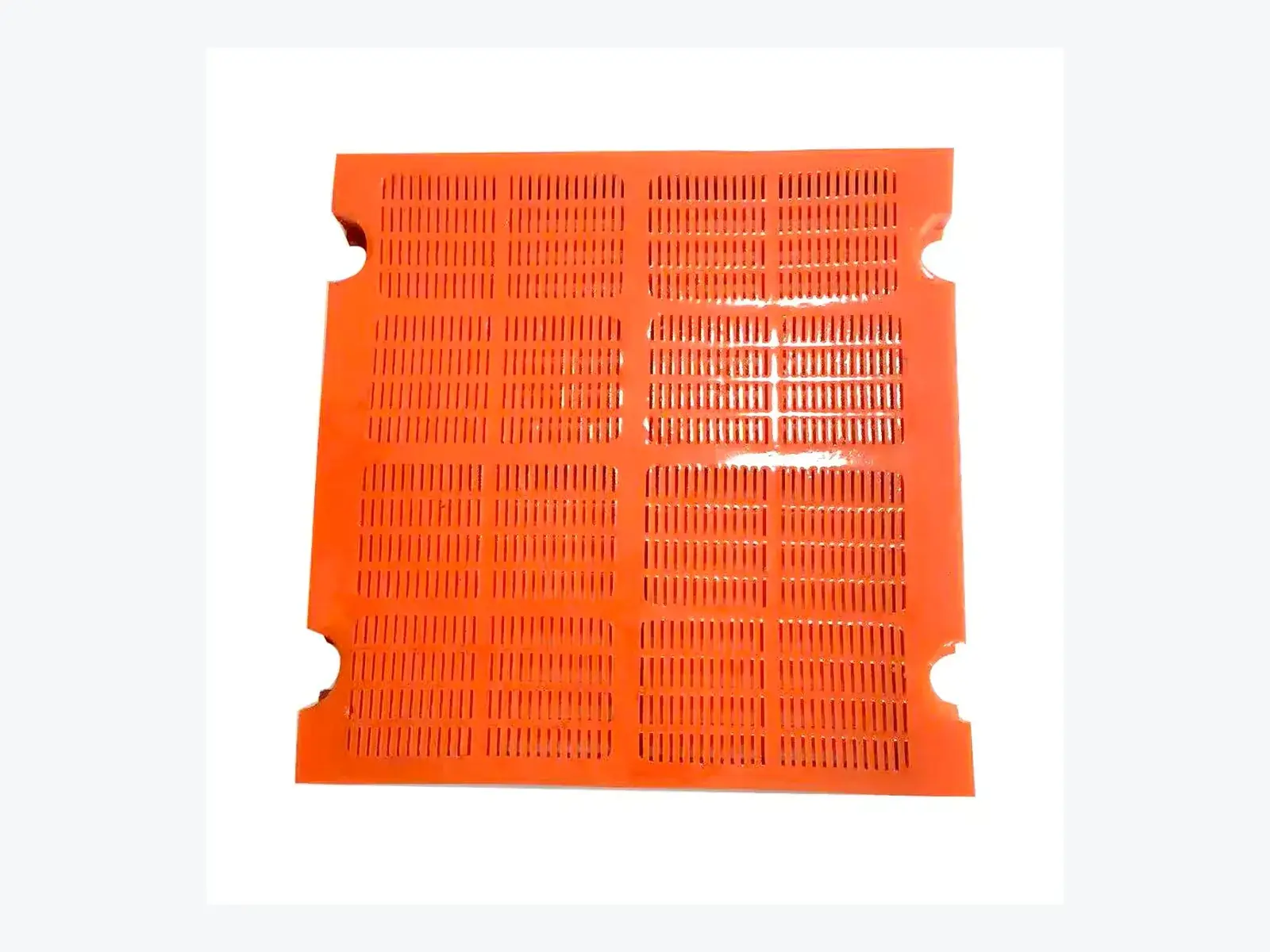
Polyurethane screen panel hardness: start with the reference
Compare polyurethane screen panel hardness against the installed reference and the problem being investigated. Shore A describes resistance to indentation under a defined test method. It is not a direct service-life, abrasion or load-capacity rating. Two panels with a similar reading can have different formulations, reinforcement and screening behaviour. Start by identifying the current part, its documented grade and the duty it performs.
OEM guidance illustrates why flexibility, support and material choice belong in the same review. This guide uses softer, intermediate and firmer as relative descriptions within a documented comparison, not universal numerical bands or SMW stock grades. A supplier must confirm the proposed configuration. A photograph or a hand-flexing demonstration cannot establish measured hardness, compound identity or suitability for a particular machine.
Compare measurements on the same basis
ZwickRoell's durometer guidance describes Shore testing as an indentation method. Ask which hardness scale, test method and specimen the reported value refers to. Request the measurement location, conditioning information and whether the result comes from the screening face, a separate test piece or a supporting layer. Keep the report tied to a compound reference and drawing revision. Do not compare a new production test piece with an unidentified worn surface as though they were equivalent evidence.
Metso describes dual-hardness construction in part of its modular range. That OEM example demonstrates why a panel need not have one uniform material reading; it does not establish SMW construction or compatibility. Where the reference includes different layers or reinforcement, ask what was actually measured. An isolated number without its method and location leaves the purchasing specification incomplete, even if it matches a familiar catalog label.
Relatively softer options: review flexibility and loaded deflection
A more compliant screening surface may be worth investigating where particles lodge in openings or moist fines adhere. Metso's pegging and blinding discussion also connects flexibility with loading and support. Do not treat softer as automatically better: the candidate must retain the required opening and remain suitable for the installed support and material bed.
Ask the plant team to distinguish useful local movement from excessive loaded deflection, damaged edges or poor seating. Record the feed impact location and any concentrated wear around supports. A proposed softer compound does not authorize a change to reinforcement, thickness or machine settings. Request a documented candidate and a controlled trial rather than ordering the softest available material to solve an unclassified blockage problem.
Intermediate options: a comparison point, not a default answer
An intermediate reading can be a useful reference only when the compared materials and test basis are known. It is not inherently the best balance between flexibility and wear. Ask which observed failure the proposed change addresses and what else remains constant. If aperture geometry or reinforcement changes at the same time, the plant cannot attribute the result to hardness alone.
Use the existing service record to define an acceptable outcome. Keep product grading, blockage observations, retention condition and maintenance findings alongside replacement dates. A panel that remains in place longer but produces unacceptable product is not an equivalent improvement. Agree which operating evidence will be reviewed and who accepts the trial result before using a middle-grade description as a purchase specification.
Relatively firmer options: separate shape retention from wear claims
Where loss of opening geometry or excessive movement is documented, a firmer candidate may deserve review with the panel construction. It must not be presented as automatically more abrasion-resistant. Abrasion, cutting, tearing and impact damage are different observations; a hardness reading does not rank all of them. Identify the dominant damage pattern and ask for relevant material evidence rather than a general claim of tougher polyurethane.
For impact zones, include feed size distribution, drop arrangement and where the material first contacts the deck. Keep structural or support concerns with the equipment team. Do not solve a damaged support by specifying a harder panel, or assume a rigid-looking photograph proves load capacity. Any change still needs confirmation of the retaining interface and the complete installed arrangement.
Wet and sticky duties need more than a Shore A reading
Water exposure, temperature and process chemicals should be identified separately from the hardness request. Sandvik's polyurethane range distinguishes soft and hydrolysis-resistant blends, illustrating that flexibility and environmental resistance are not the same specification. These are that OEM's material options, not a declaration of SMW formulations. Ask the supplier to confirm the proposed material against the recorded operating environment.
For a wet or sticky duty, describe the material coating, cleaning practice and whether blockage changes with feed conditions. McLanahan's selection guidance also considers the operating application rather than a single material label. Do not infer chemical resistance, drainage performance or fatigue life from colour or Shore A alone. A flip-flow system additionally needs the correct flexing and perimeter arrangement; a softer modular panel is not a substitute.
Use wear evidence and a controlled comparison
Map damage by deck position and retain a traceable sample when practical. Distinguish gradual surface wear from cracking, edge damage, loose retention and local deformation. Note inspection dates and relevant changes in feed or operation. The purpose is to make the proposed material comparison interpretable, not to claim that the existing hardness caused every symptom.
Agree a limited trial with the responsible plant team, including product checks and inspection criteria. Record the candidate's identification and known differences from the reference. Review the actual result before expanding the order. Neither an OEM example nor a laboratory reading establishes a lifetime gain on a different deck. Leave unresolved formulation or test evidence explicitly open in the quotation review.
Polyurethane screen panel hardness comparison checklist
Use relative descriptions to organize evidence, not to create universal hardness grades or a numerical selection chart.
| Review item | Evidence needed | Do not infer |
|---|---|---|
| Softer candidate | Blockage mechanism and loaded surface behaviour. | More flexibility always improves screening. |
| Intermediate candidate | Known reference and defined trial acceptance. | A middle reading is automatically optimal. |
| Firmer candidate | Opening stability and actual damage pattern. | A universal abrasion-life ranking from hardness. |
| Face and support layers | Test location and construction drawing. | One reading describes the whole panel. |
| Wet or chemical exposure | Operating environment and material confirmation. | Shore A establishes hydrolysis resistance. |
| Replacement decision | Same-basis tests and recorded plant observations. | A catalog number proves machine suitability. |
Prepare a material-review enquiry
Use the Modular and Flip-Flow pages to identify the relevant construction, and the Replacement Guide to prepare the reference. Submit known information through RFQ, separating confirmed material records from assumptions. Request the offered configuration and unresolved evidence in writing.
Standard panels are in stock (3–7 day lead time); custom panels are made to drawing or sample (lead time confirmed per drawing or tooling), with no MOQ and worldwide shipping. Confirm availability for the requested configuration; no particular hardness grade is promised by this general supply statement.
- Machine, deck position, drawing revision and required quantity.
- Existing compound reference, hardness report and measurement basis if known.
- Same-panel photographs, support details and recorded damage pattern.
- Feed, moisture, chemical exposure, proposed trial and delivery destination.
Related resources
- Modular Polyurethane Screen Panels
Identify the installed panel construction and support interface.
- Flip-Flow Polyurethane Screen Panels
Check the required flexing system rather than choosing by softness alone.
- Screen Panel Replacement Guide
Organize same-reference photographs, drawings and measurements.
- Request a Quote
Send material records, duty and unresolved questions for configuration review.
- Vibrating Screen Panel Wear: 6 Common Failure Causes
Separate surface wear from support, retention and loading problems.
- Polyurethane vs Rubber vs Woven Wire Screen Media: 3-Way Guide
Compare media families before treating hardness as the only selection input.
Technical references
- Metso — How to reduce pegging and blinding
Flexibility must be considered with support and loading. It is not a universal softer-is-better rule.
- Metso — Screening media modular systems
OEM-specific dual-hardness construction illustrates why the measured layer must be identified; not evidence of SMW construction.
- Sandvik — Screenex polyurethane screening media
Separately describes soft and hydrolysis-resistant OEM blends. Their availability and performance are not transferred to SMW.
- McLanahan — How to Choose the Right Type of Screen Media for Your Aggregate Plant
Application and media trade-offs support a duty-based review, not hardness-based lifetime guarantees.
- ZwickRoell — Shore hardness / durometer hardness
Test-equipment manufacturer's explanation of indentation measurement. This article does not certify a panel or prescribe a laboratory procedure.