
By Screen Media Works Editorial TeamUpdated
Polyurethane vs rubber vs woven wire screen media: start with the duty
Choosing polyurethane vs rubber vs woven wire screen media is a system decision. The feed material, particle-size distribution, moisture, clay content, required separation, feed impact, deck arrangement and available installation space all affect the result. A material that performs well in one application may be unsuitable in another.
Before comparing materials, record the target cut size, feed characteristics, current media type, failure pattern, screen motion and the way panels or cloth are supported. If possible, collect photographs of the deck, fastening system and worn media. These details are more useful than choosing a material from a generic ranking.
Polyurethane screen media
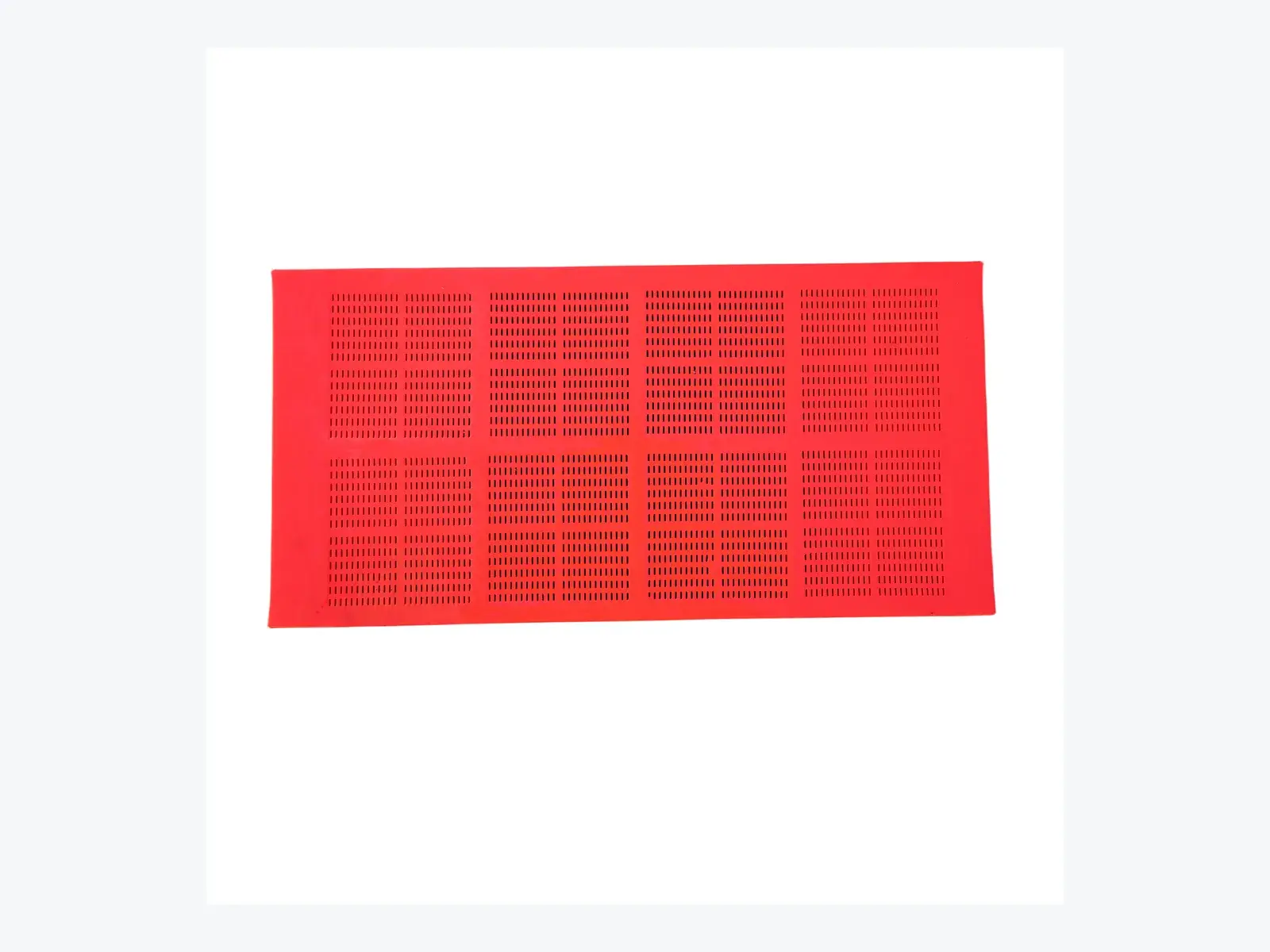
Polyurethane screen media is commonly considered for modular panels and other configurations where abrasion resistance, elastic behavior and replaceable sections are important. Depending on the formulation, panel geometry and support design, polyurethane can be used in applications involving wet screening, dewatering or sizing.
Flexible polyurethane designs may reduce some aperture-plugging (pegging) problems because the media can flex as particles contact the openings. Do not treat this as a blanket anti-blinding claim. Blinding is commonly associated with moisture and sticky fines building up on the screen surface; its severity depends on feed stickiness, media flexibility and thickness, hardness, blank areas, support layout and screen load. Assess pegging and blinding separately before changing media. Confirm the grade-specific temperature and impact limits with the supplier rather than assuming that the material name establishes suitability. Metso's screening-media selection guide flags hot water and acids as compatibility checks for polyurethane applications; verify the resistance of the exact grade and current supplier specification.
- Consider it when modular replacement, abrasion resistance and the required panel configuration align with the operating duty.
- Check panel dimensions, aperture shape and tolerance, panel thickness, fixing arrangement, support rails and compatibility with the deck.
- Confirm the polyurethane grade and hardness against the actual feed, temperature and impact conditions; do not select by material name alone.
Rubber screen media
Rubber panels are commonly considered for dry applications, abrasive material and heavier, coarser feed that could damage standard wire cloth. Their heavier construction can provide longer wear life, but panel weight and deck loading must be checked against the screen design and operating capacity.
Rubber can be useful in impact-intensive duties and usually has fewer geometric openings than woven wire. However, a lower open-area percentage does not translate directly into the same percentage reduction in plant throughput: reduced pegging or blinding, the installed deck layout and actual feed conditions can offset some of the difference. Compare measured throughput under the same duty rather than using open area alone. Overloading can restrict screen movement and stratification or cause cracking when the screen's capacity is exceeded; check the actual compound, thickness, aperture, panel weight and equipment capacity. Metso's screening-media selection guide flags oil exposure as a compatibility check for rubber applications; verify the compound's resistance and current supplier specification.
- Consider it for high-impact zones when the compound, thickness and support arrangement are designed for the feed.
- Check the effect of panel thickness and opening geometry on effective screening area and the required cut.
- Ask for compound information and application references relevant to the material and operating conditions.
Woven wire screen media
Woven wire cloth is widely used where a defined aperture, a relatively open screening surface and a particular separation duty are required. Wire diameter, weave, aperture shape, material and tensioning method all influence performance.
Woven wire often provides a high geometric open area and usually has a lower initial cost than synthetic media. It is widely used, but replacement time depends on the deck's tensioning and edge-fixing arrangement. Manufacturer guidance also notes that it usually has a shorter wear life than synthetic media. Wire diameter, weave, material grade and tensioning must be matched to the feed and operating conditions; wet, sticky or near-size material can still cause blinding or pegging.
- Consider it when open area, aperture definition and the existing tensioned-cloth system fit the application.
- Specify aperture, wire diameter, weave, material grade, panel dimensions, hooks or edge details, and tensioning requirements.
- Check whether impact protection, feed distribution or a different aperture profile is needed to control premature damage or blinding.
Hybrid screen media: when a combined design is worth considering
Hybrid media combines woven wire with reinforced rubber or polyurethane elements. It can be worth evaluating when a plant needs more open area than a conventional synthetic panel while also seeking better wear life or reduced pegging and blinding than standard wire cloth.
McLanahan describes hybrid media for certain dry-screening applications with moisture and a high proportion of fines, and reports that its design can provide more open area than polyurethane while lasting longer than woven wire. These are manufacturer-reported tendencies, not guaranteed results for every hybrid product. Confirm the exact construction, aperture pattern, support interface and application data with the supplier.
- Consider hybrid media when neither standard wire nor a full synthetic panel meets the required balance of open area, wear life and pegging/blinding control.
- Ask whether the proposed design uses reinforced rubber, polyurethane or another flexible element, and how it is supported and tensioned.
- Request application-specific performance data; do not assume that all hybrid products share the same open area or service life.
Side-by-side comparison: where the trade-offs usually sit
No material wins every category. This directional comparison follows published manufacturer selection guidance; it is not a universal performance ranking. Actual open area, wear, pegging/blinding risk, capacity and total operating cost depend on the exact media construction, aperture, thickness, screen design, feed and changeout frequency.
| Selection factor | Woven wire | Rubber | Polyurethane |
|---|---|---|---|
| Open area and actual capacity | Often has a higher geometric open area than molded synthetic panels; verify wire diameter, aperture and installed deck layout. | Typically has fewer geometric openings than woven wire; this alone does not predict the same percentage change in plant throughput—check pegging/blinding, installed layout and actual duty. | Often has lower geometric open area than woven wire; assess actual capacity together with pegging/blinding risk, panel design and wear life. |
| Common selection context | Widely used for general screening where high open area, lower initial cost and straightforward replacement matter. | Often considered for dry duties or heavier, coarser feed that could damage standard wire. | Often considered for wet or abrasive duties; flexible designs may reduce pegging, while sticky-fines blinding must be assessed separately. |
| Wear life and cost trade-off | Usually lower initial cost, but generally shorter wear life and potentially more frequent changeouts. | Usually higher initial cost than wire, with longer wear life; weigh this against lower open area and deck loading. | Often offers longer wear life than woven wire; lower open area can reduce throughput. Compare expected output, service interval and cost per ton for the actual duty rather than assuming longer life automatically offsets lost capacity. |
| Key checks before selection | Wire diameter, weave, tensioning, wear pattern and blinding. | Panel weight, compound, thickness, aperture and screen capacity. | Panel thickness, aperture, fixing system, wear pattern and open-area trade-off. |
How to choose for common operating conditions
First distinguish pegging from blinding. Pegging occurs when near-size particles become wedged in the apertures; blinding occurs when moisture and sticky fines build up on the screen surface and cover the openings. For pegging, review aperture size and shape, wire profile, media flexibility and support layout; self-cleaning cloth or suitable flexible media may help. For blinding, review feed moisture, unnecessary blank surface area, media thickness and flexibility, hardness and screen load. Softer or thinner media may reduce buildup in some conditions, but excessive deflection under heavy load can accelerate wear. One media change should not be assumed to solve both mechanisms.
For coarse, high-impact feed, map where the impact occurs and whether the current failure is localized near the feed end. A more impact-tolerant media construction or a redesigned feed arrangement may be more effective than changing the entire deck material.
For a duty that prioritizes open area and a defined cut, compare the open-area figures and aperture tolerances in the proposed specifications. Do not compare nominal aperture alone: wire diameter, panel thickness, opening shape and support geometry all affect the usable screening surface. Metso's Screening Media Handbook defines relative open area (ROA) from aperture size and pitch and notes that this calculation does not account for product size or blind areas. The same handbook compares effective open area (EOA) with ROA and shows how supports and clamping bars can reduce the usable area of a tensioned-wire deck. Ask the supplier to state the calculation basis and whether the figure refers to the media module or the installed deck. Separately assess the usable screening area of the complete deck, accounting for supports, clamping bars, blank zones and other obstructions. Compare only figures calculated on the same basis.
Metso's Basics in Minerals Processing Handbook (Edition 12, Section 4.8, printed page 86) gives broad screening-media examples rather than universal thresholds: rubber marked 60 sh for dry feed above 35 mm; polyurethane for wet feed in an entry printed as '<0–50 mm'; and soft rubber marked 40 sh for dry or moist feed below 40 mm. The source table uses the abbreviation sh without specifying a Shore A scale, so do not convert it to Shore A unless the exact product specification confirms that scale. It also flags oil exposure for rubber and hot water or acids for polyurethane. Treat these as general selection guidance, not product limits, and verify the wet-feed size notation with the source or supplier before using it as a specification. Confirm the exact grade, hardness scale, chemical compatibility, temperature, panel thickness, support design and screen load against current supplier data.
For dewatering, fine sizing or a difficult separation, evaluate the full panel design and operating parameters. Material choice alone cannot establish capacity, cut efficiency or final moisture. For maintenance involving welding or other hot work near rubber or polyurethane media, account for fire risk: Metso identifies a fire hazard associated with synthetic screening media, including rubber and polyurethane; weld drops, molten steel and incandescent debris are described as possible ignition sources. It recommends removing the media or covering the whole area with anti-flame sheets during maintenance and keeping a fire extinguisher or water hose available. Follow site hot-work controls and confirm whether a fire-retardant rubber option is available and specified for the installation.
What to provide before requesting a quotation
A useful quotation request should make it possible to check fit and application suitability. Send as many of the following items as are available:
- Screen make and model, deck location and number of decks.
- Current media type, panel or cloth dimensions, thickness and fixing or tensioning details.
- Nominal aperture, opening shape and any relevant wire diameter or panel specification.
- Feed material, approximate size range, moisture condition and whether clay or sticky fines are present.
- Main problem to solve: wear, impact damage, blinding, pegging, capacity, separation accuracy or replacement fit.
- Clear photographs of the installed media, underside/supports, fastening points and worn or damaged areas.
- Required quantity and target delivery date.
A practical selection rule
Treat polyurethane vs rubber vs woven wire screen media as candidate constructions, not as universal solutions. Shortlist the options against the actual feed, separation target, impact, wear pattern, deck interface and maintenance practice. Then confirm dimensions, material specification and installation compatibility before ordering.
If the operating data are incomplete, start with photographs, current media measurements and a description of the failure. A technically sound recommendation should identify what is known, what remains uncertain and which details must be confirmed before supply.
Related resources
- Screen Panel Replacement Guide
Check panel dimensions, aperture and fastening details before ordering a replacement.
- Polyurethane Screen Media
Review available polyurethane screen formats and configurations.
- Aggregate Screening Application
See how feed conditions, separation targets and deck layout shape screening decisions.
- Tensioned vs Modular Polyurethane Screen Panels: 6 Key Checks
Compare mounting arrangements separately from the screening material.
- Vibrating Screen Blinding vs Pegging: 6 Checks
Distinguish deposits from trapped particles before considering a media change.
Technical references
- McLanahan — How to Choose the Right Type of Screen Media for Your Aggregate Plant
Manufacturer guidance on open area, woven wire, rubber and polyurethane selection trade-offs.
- Metso — Basics in Minerals Processing Handbook, Edition 12, Section 4.8
Official Metso PDF, Edition 12, Section 4.8, printed page 86. The table gives general feed-size examples and flags oil exposure for rubber and hot water or acids for polyurethane. The wet-feed entry is printed as '<0–50 mm'; verify its intended meaning before using it as a specification.
- Metso — Optimize screen performance with monitoring and right media
2025 manufacturer guidance on application-specific media selection, wear life, open area, modular systems, pegging and blinding.
- Metso — How to reduce pegging and blinding
Explains the different mechanisms behind pegging and blinding and the effects of aperture size, flexibility, blank areas, media thickness and load.
- McLanahan — How To Size and Select a Vibrating Screen for an Aggregate Application
Manufacturer guidance on feed conditions, open area, media wear life, rubber, polyurethane and hybrid screening media.
- Metso — Screening Media Handbook, Version 2.1 (September 2024)
Version 2.1 (September 2024), printed pages 330–331, distinguishes relative open area (ROA) from effective open area (EOA). The handbook explains that ROA uses aperture size and pitch and does not account for product size or blind areas; it also illustrates how deck supports and clamping bars affect usable area.
- Metso — Does rubber screening media reduce capacity?
Metso explains that open area alone does not determine plant capacity; reduced clogging and the active area of the installed deck can affect the real production comparison. Treat this as a case-specific manufacturer explanation, not a universal performance guarantee.
- Metso — Service Tip: Benefits of using synthetic screening media in the aggregate production
Metso identifies fire as a hazard for rubber and polyurethane screening media, with welding sparks, molten steel and other hot-work debris as possible ignition sources. It recommends removing the media or covering it with anti-flame sheets during maintenance and keeping fire-suppression equipment available.