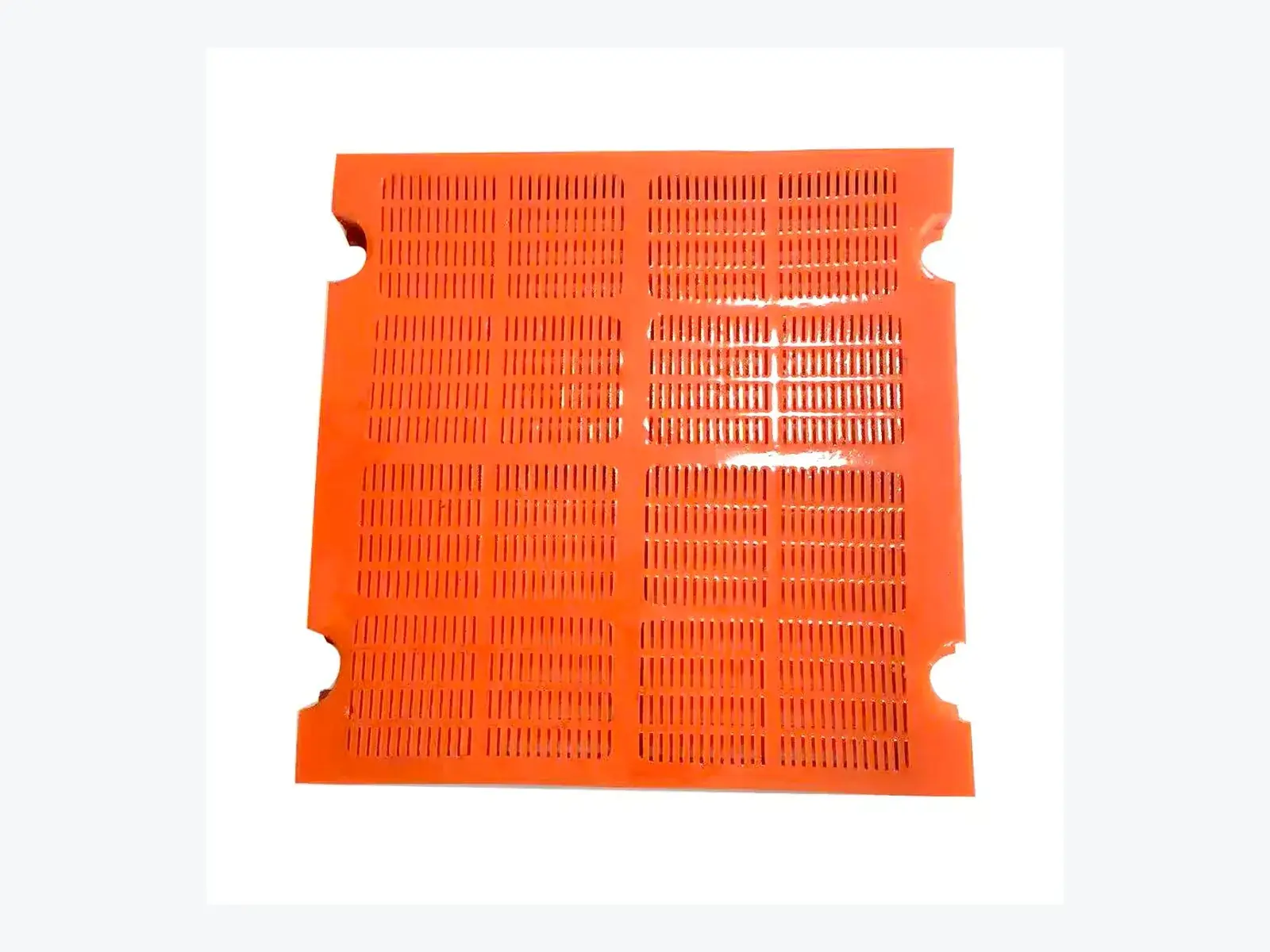
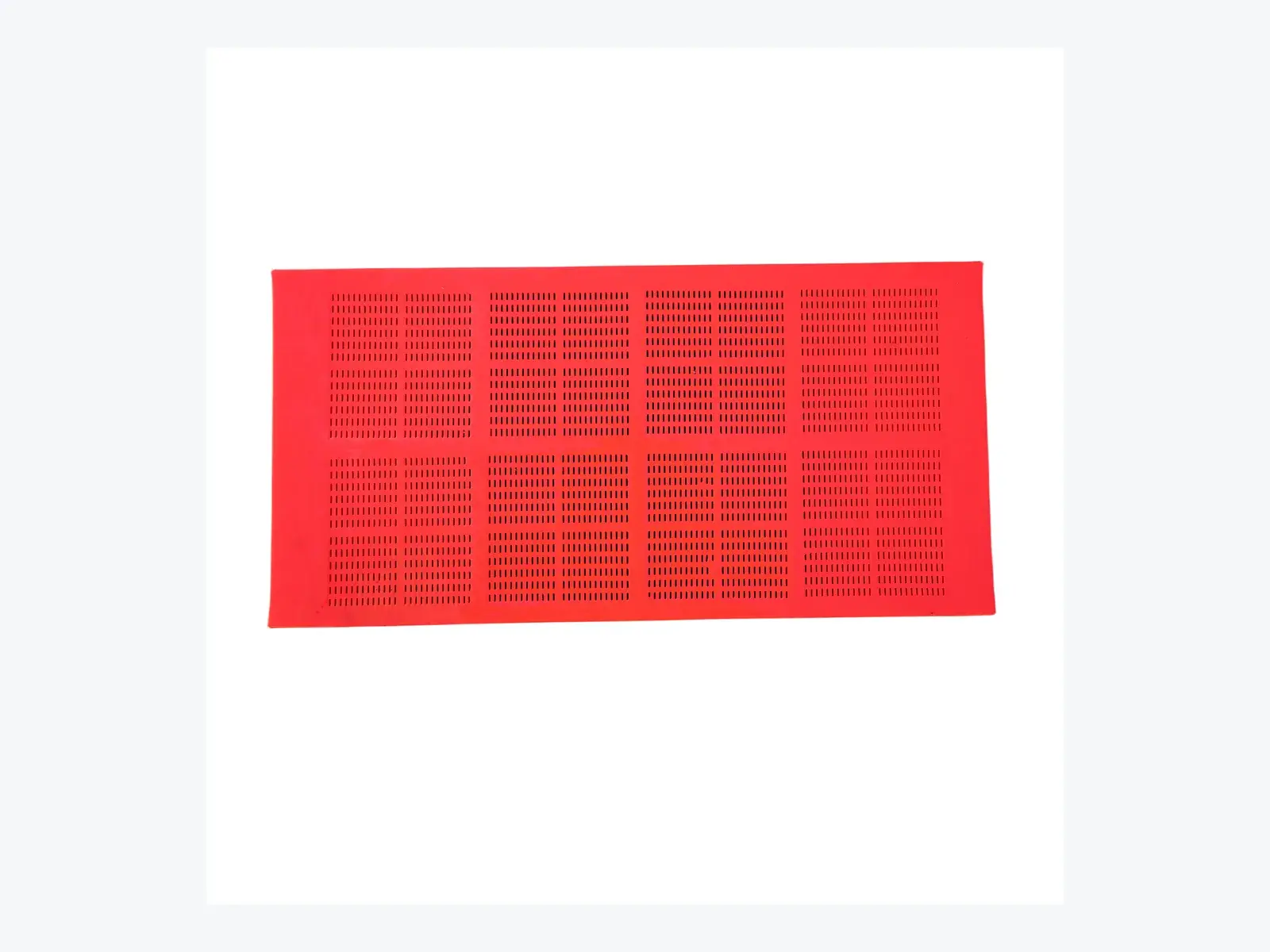
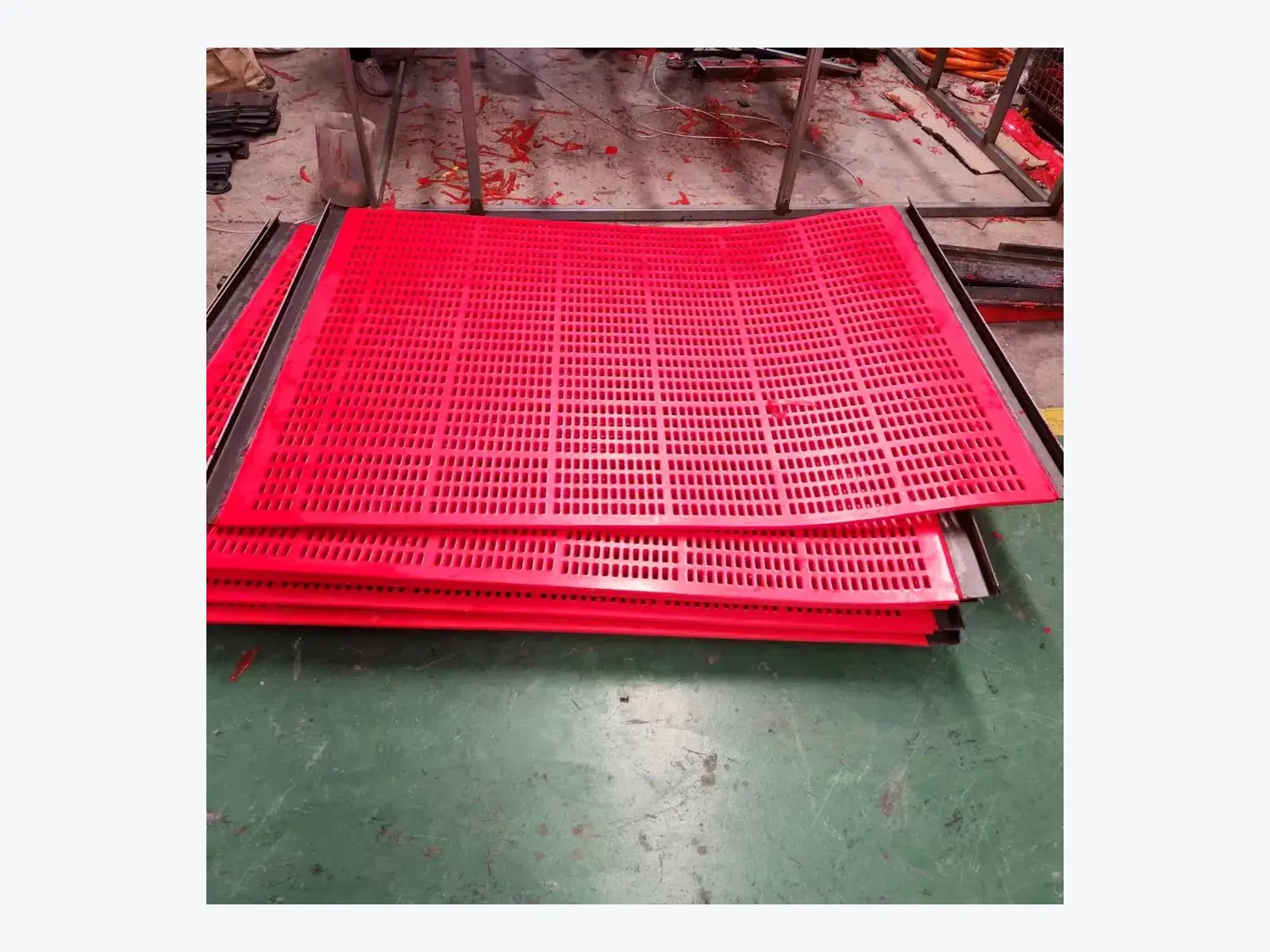
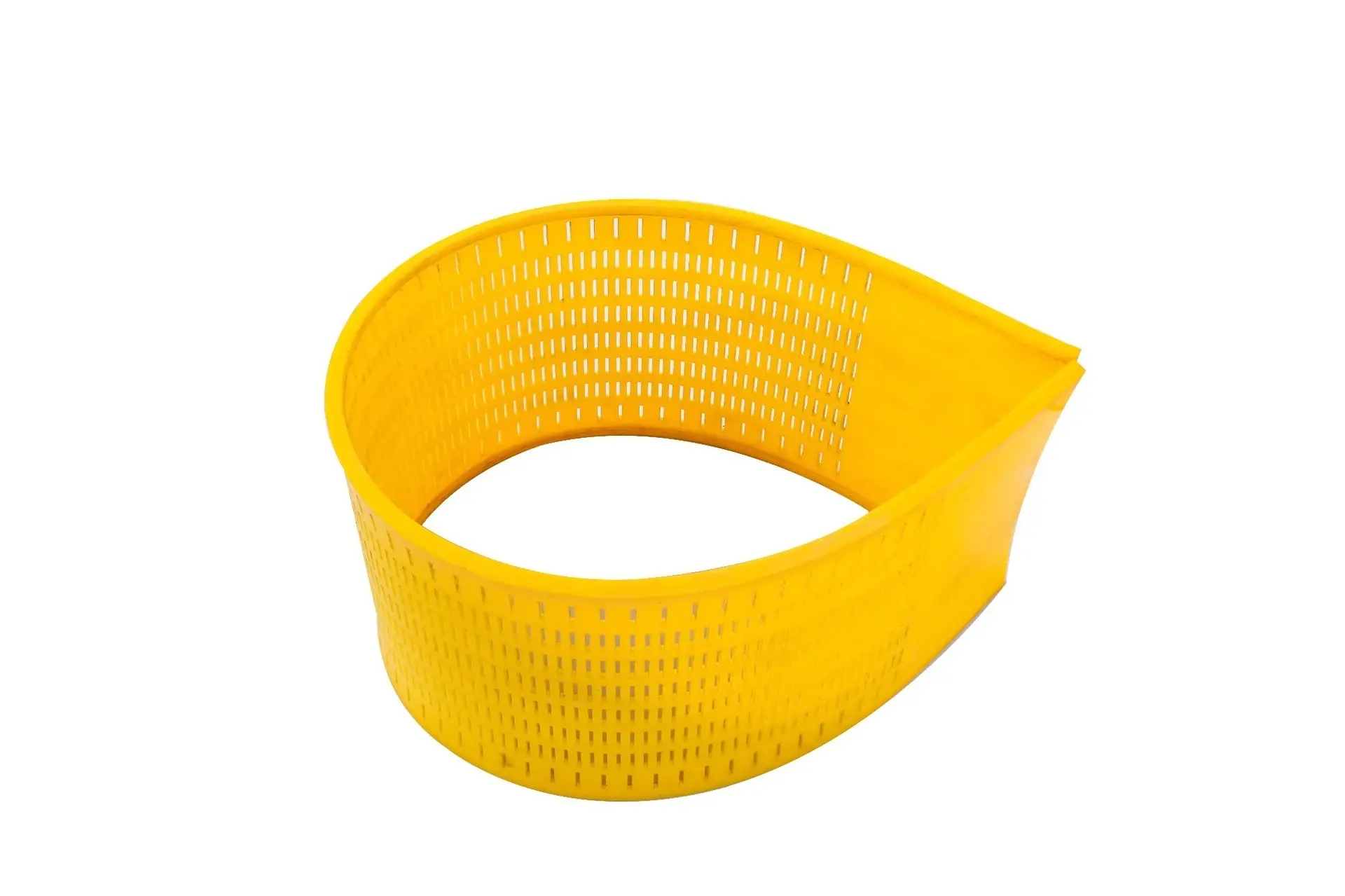
Compare modular, dewatering, tensioned and Flip Flow polyurethane screening media, often referred to as PU screen panels, before requesting a replacement or new screen review.
Choose the Right Polyurethane Screen Panel Format
Polyurethane screen panels are not selected from a name alone. Start with the current panel format, the deck or fixing context, the aperture and the screening duty. The four families below provide different replacement-review paths.
Modular Polyurethane Screen Panels
Start here when the current deck uses individual replaceable modules.
Review the module footprint, visible underside or interface, aperture form and the surrounding deck layout. A current panel, deck photographs or a sample helps identify the format before replacement is discussed.
Start here for wet screening or drainage-oriented panel review.
Review panel dimensions, slot geometry, slot direction and deck details with the wet screening duty. Drawings, photographs or an existing panel help connect the requested separation to the current replacement reference.
Start here when the current screen is held by a tensioning arrangement.
Review the overall screen shape, aperture, hook edge, tension direction and contact with the current deck. Side- or end-tension details should be confirmed from installed views, a drawing or a sample before quotation.
Start here when the current flexible panel, edge and support arrangement can be documented.
Review the flexible panel form, visible aperture, retention edge, support structure and installed system together. Current photographs, a drawing or an old sample help establish the replacement reference before quotation.
Other screen media and replacement accessories can be reviewed on request when the current reference does not match one of these published product families.
Do not treat an aperture description or screen machine name as enough to identify a replacement. The current panel can show details that a short description does not capture, including underside geometry, hook edges, contact areas and panel orientation. A concise photo set lets the review begin with the existing installation rather than an assumed format.
Polyurethane Screen Panel Selection Guide
Use the current screen and deck as the starting point. This guide helps route a request; final product details are confirmed during drawing, photograph or sample review.
Selection input
How to use it for panel selection
Panel format
Identify whether the current reference is a modular panel, dewatering panel, tensioned screen or flexible Flip Flow screen mat.
Screen deck type
Review the current deck, support arrangement and visible interface before selecting a replacement path.
Material condition
Use wet, dry, sticky or fine-material observations as screening context, together with the current panel and deck reference.
Opening requirement
Record the available opening shape, direction and target separation from the current panel or drawing.
Replacement information
Keep dimensions, edge or fixing details, photographs, drawings, samples, quantity and destination with the same request.
Modular media
Current format
Individual replaceable modules on a compatible deck.
Review before quotation
Module dimensions, aperture, visible interface and adjacent-panel layout.
A complete part number is useful but not required. A replaceable module points toward modular media; a wet-screening panel with drainage review points toward dewatering media; a hook-edge or tension arrangement points toward tensioned media; and a flexible panel with visible retention and support evidence points toward Flip Flow media. When the product family remains unclear, send the current reference rather than guessing a replacement format.
Aggregate screening, sand washing and dewatering, and mining screening are application directions that help frame the review. They do not replace the current panel and deck reference, so use the application guides to prepare relevant operating information before a quotation request.
Share the current panel or screen, measurable details, deck photographs and screening duty. Drawings, photographs or a sample help confirm the product family and quotation basis.